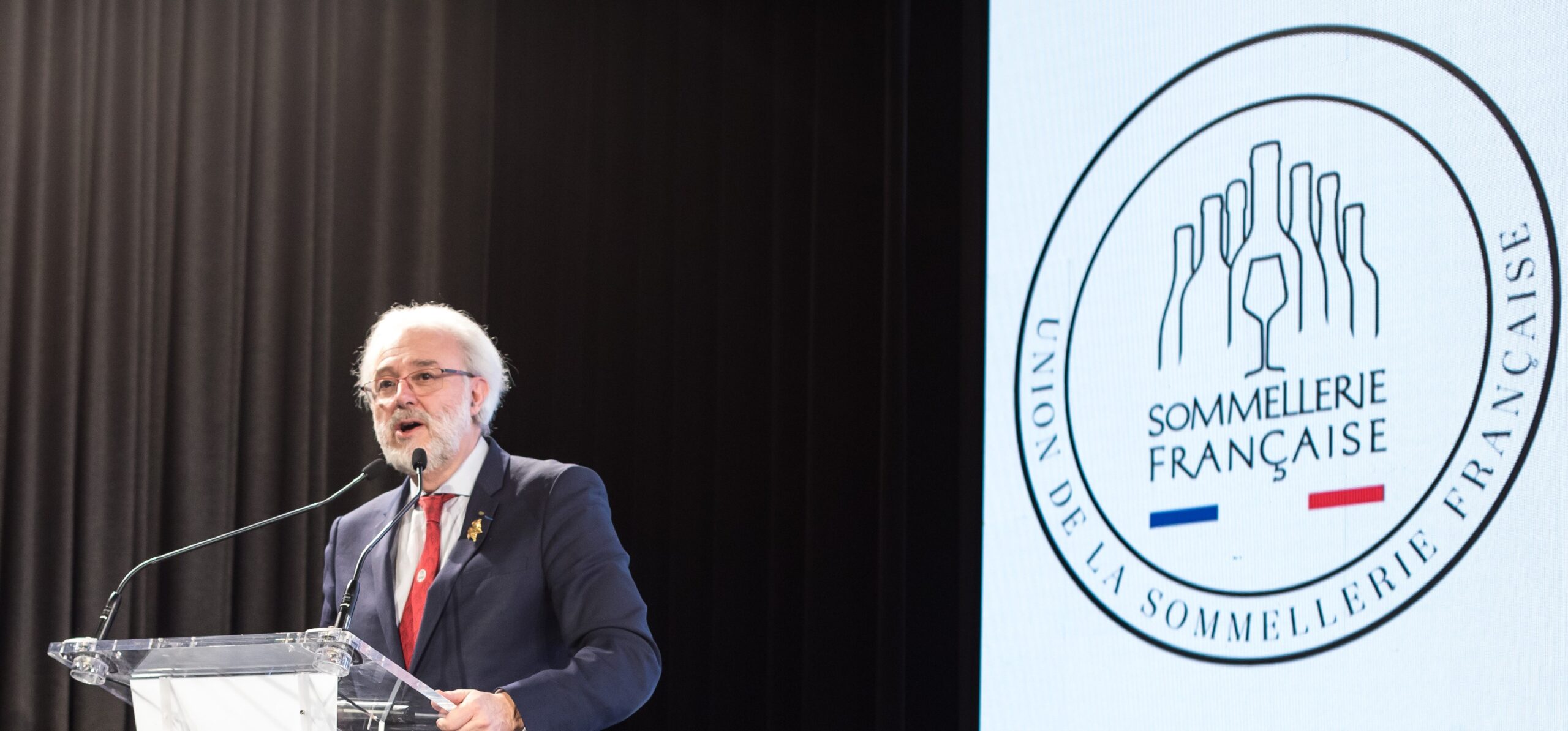
For Philippe Faure-Brac, representing France at the ASI Contest Best Sommelier of the World 1992 in Rio de Janeiro meant carrying a history of excellence. Winning in Rio de Janeiro brought a different challenge. How do you live up to this title ASI Best Sommelier of the World in a country where wine and hospitality is part of the culture? A country where sommellerie isn’t a job. It’s a highly regarded profession.
Alone in an isolation room before the 1992 final in Rio de Janeiro, Philippe Faure-Brac was handed an extensive wine list and a great deal of information to study. He looked through it, then closed it. After nearly a decade of preparation, he needed something more than another fact to carry him onto the stage.
“I thought about my daughter, who had just been born; about my grandfather, who had inspired me and had recently passed away; about my family; and all the people on my team in Paris who were supporting me,” he recalls.
Then he put his back against the wall. “Now, when your back is against the wall, you have to move forward,” he told himself. He took a physical step into the room before stepping out to face the final. “That was an incredibly powerful moment because it allowed me to truly concentrate and then walk onto the stage for the final and give everything I had to give.”
The pressure had been building long before Rio. France had won the three preceding world titles: Jean-Luc Poutot in 1983, Jean-Claude Jambon in 1986 and Serge Dubs in 1989. Faure-Brac was competing for himself, but he was also expected to uphold a formidable national record.
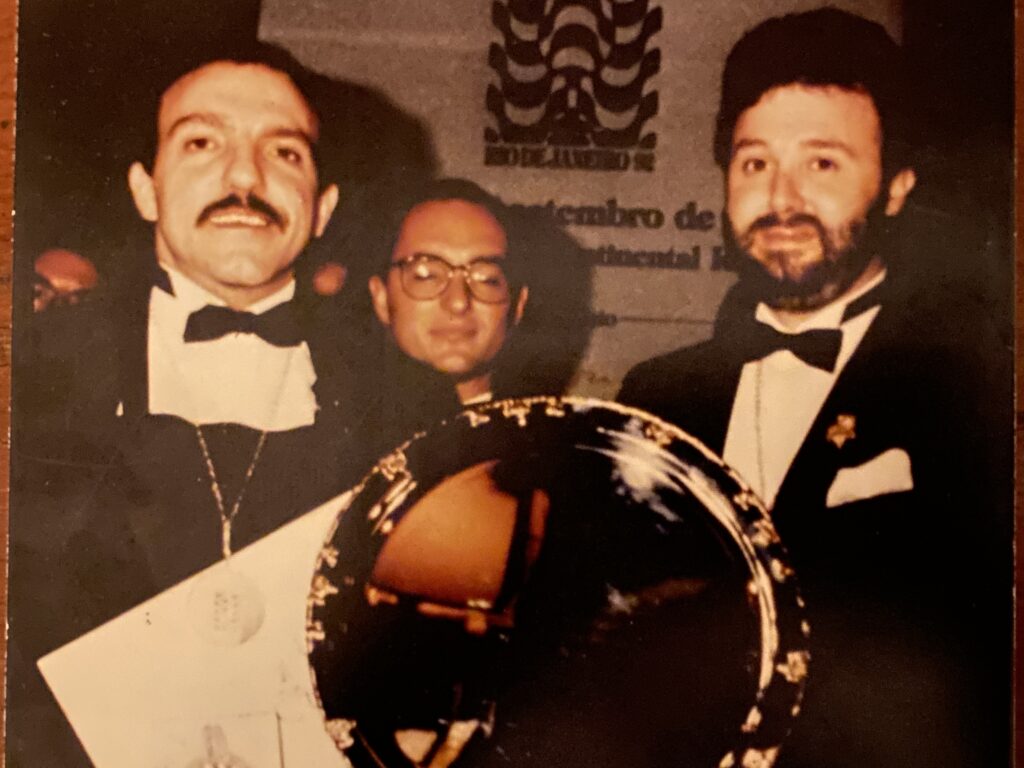
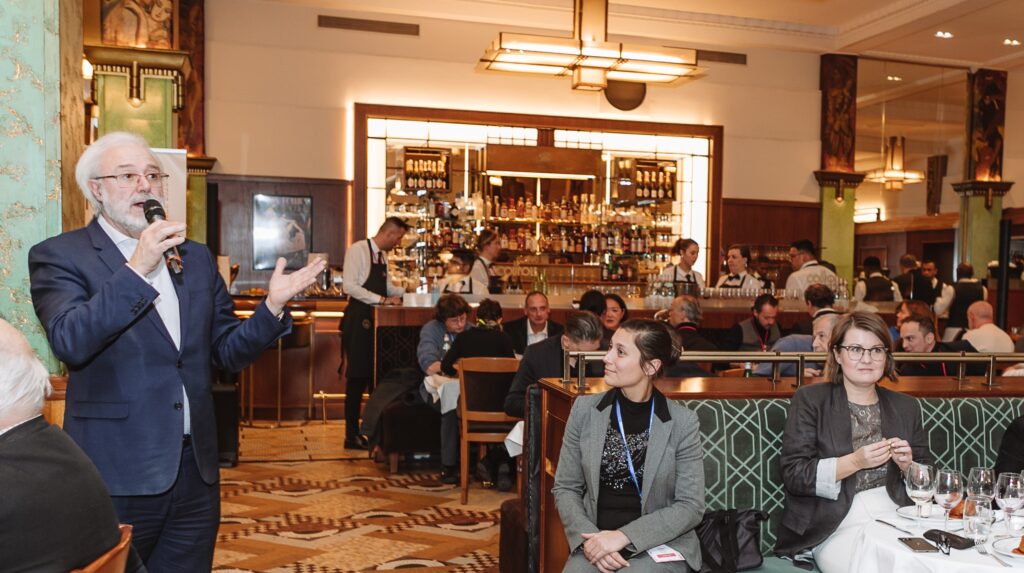
Philippe Faure-Brac address the crowd at a dining event at the ASI Contest Best Sommelier of the World 2023 in Paris.
“Representing France always carries a certain significance in a sommelier competition,” he says. “I therefore felt additional pressure to keep the crown in France, or at least to try very hard to do so. That greatly motivated me throughout my preparation and during the competition itself. I wanted to help France achieve a fourth consecutive victory, which is what ultimately happened.”
He describes the weight of that expectation with care. “Being French felt almost like a mission or an inheritance. It did not give me any privileges, but it gave me a strong desire to perform well and properly represent both my country and the profession.”
For Faure-Brac, preparation had become “a little obsessive.” He had worked toward that moment for almost ten years, and he knew the final would demand that he draw on all of it. Yet his memory of performing is one of ease rather than strain. “I felt at home and comfortable. I enjoyed myself, and I was able to give pleasure to the audience.”
That feeling points to the principle that still guides his understanding of sommellerie. “I believe that is what our profession is about. It is about finding pleasure in what we do so that we can relate that pleasure to others. Our job is about truly listening to them (customers) so that we can respond appropriately and make them happy.”
Victory changed how others saw him. It also changed what they expected of him. “There was certainly a before and an after,” he says. “We continue to grow and evolve, but the way other people look at us changes. There is permanent pressure.”
He puts the obligation more sharply: “You can win this competition only once in your life, but you must represent the title every day.” For him, that means remaining informed and curious, and continuing to share what he knows.
The change was immediate at his Paris restaurant, Le Bistro du Sommelier. Asked at the post-contest press conference what he would do first on returning home, Faure-Brac answered, “I’m going to buy more chairs for my restaurant.” The remark drew a laugh, but business did grow. So did the demands on his time. Radio, television, books and education became part of a professional life that extended well beyond restaurant service. More than 30 years later, he says he still receives requests to take part in new activities every day.
In 2023, the ASI Contest Best Sommelier of the World returned to France, with Faure-Brac as host. The champion was now the master of ceremonies of more than a contest. The event was deep dive into the very best of Parisien hospitality. At the time he was president of the Union de la Sommellerie Française. Hosting an event such as this carried its own expectations for the host country. It was only the second time France had staged the contest, and the expectation was for the greatest ASI Contest Sommelier of the World in the history of the contest.
“We wanted to welcome the entire world as it deserved to be welcomed,” he says. The final at Paris La Défense Arena drew thousands to watch Latvia’s Raimonds Tomsons take the title. Faure-Brac saw something larger in the occasion: “Above all, they witnessed a victory for sommellerie itself. It was a celebration of the profession and an opportunity to introduce it to a much broader audience than usual.”
The setting was grand, but his measure of success was hospitality. “We welcomed the world with tremendous enthusiasm and pride, but also with humility and a genuine spirit of hospitality. We truly wanted people to feel comfortable.” Candidates, finalists and organizers had different roles, he says, but all belonged to the same family of sommellerie.
That view also shapes the advice he offers today’s competitors. Study and technical skill remain essential, particularly as the profession now encompasses more beverages, languages and approaches to service than it did in 1992. But a candidate must still meet the people in front of them. “They should imagine that they are working in their own restaurant. Their fellow candidates are their colleagues, and the judges, visiting delegates and audience are their guests, with their own expectations and individual personalities.”
The French champion who once felt charged with keeping a crown in France now speaks most often about making the profession accessible to others. Asked how he hopes to be remembered, he does not begin with Rio or Paris. “I would like people to remember that I was a sommelier,” he says. “I want people to understand that a sommelier is not simply an icon, even if there may occasionally be an element of that. Above all, a sommelier is someone who is plays a key role in our culture, our societyand who brings people together.”