Rediscovering Persian wine culture with Samira Kakh
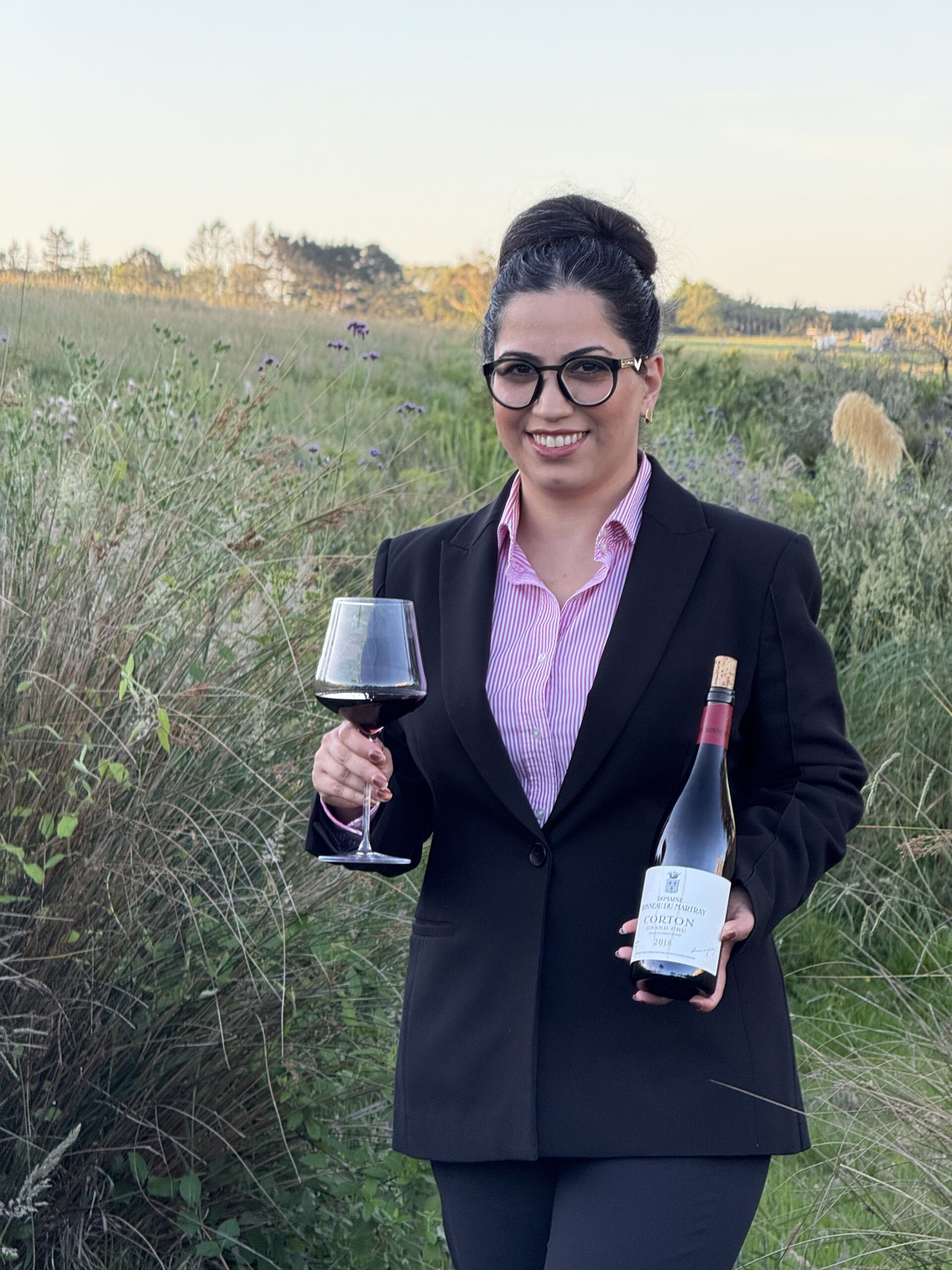
Samira Kakh was born and raised in Iran, a country where the culture of wine is ancient, complex, and largely unspoken in modern life. Today, she is building a future in wine in New Zealand, having passed her certified sommelier course with the Court of Master Sommeliers, working through WSET, and most recently completing ASI Certification 1. In theory, it is unimaginable. On paper, it seems improbable. In conversation, it feels inevitable.
Her story is not one of rebellion, but of continuity. Of curiosity carried quietly across borders. Of recognising something familiar the moment it appears, even if it wasn’t poured at the table.
While wine was forbidden during her upbringing, hospitality was anything but absent. “Even though alcohol is prohibited, the Persian table has always been about generosity, beautiful flavours, and connection,” she explains. “My earliest memories are of my mother and grandmother cooking dishes layered with herbs, spices, and textures. Nothing came out of a package. Everything was from the farm and the hillsides.”
Food was formative, not ornamental. Her grandparents and great-grandparents were farmers. Pistachios, almonds, pomegranates, sheep, preserved meats, foraging trips into the mountains. “Food was always part of my DNA,” she says. “I was really curious about flavours… I grew up next to my grandparents butchering, preparing meat, harvesting from the farm. My grandfather used to forage for herbs and spices from the mountains. I would play around him but also smell and watch.”
That attentiveness, the habit of observing before speaking, remains central to how she tastes today. “It comes naturally to me,” she says. “When people smell wines, it brings a lot of memories back to life when I’m doing blind tastings.”
Wine itself, however, lived first in the imagination. “Even if modern Iran doesn’t openly speak about wine, its history is unavoidable,” she says. “The poetry of Hafez, Rumi, and Omar Khayyam is full of wine metaphors. I grew up reciting verses about wine long before I ever saw a bottle.”
She pauses before correcting the idea of metaphor. “When I was talking to my father, he would smile and say, ‘Well, they’re not exactly metaphors.’” Wine, she notes, was never alien. “It was always something romantic… in production, in consumption, in understanding it, in serving it. All of these layers were part of Persian poetry.”
Her family carried that memory quietly. Vineyards were referenced not as nostalgia relics of generations past, but as an important part of their agrarian history. “My father and grandparents grew up in a region with vineyards,” she explains. “They talked about grape quality, weather, vintage variation. After the revolution, they adapted. Wine wasn’t discussed openly, but the refinement around flavour and craftsmanship stayed.”
If anything, it re-emerged later, unexpectedly. “My brother and my father now make wine,” she says simply. “It’s illegal, but they do it. The last time I went to Iran, I tried their wine. It was really good. Super fruity, fresh, high acidity, unoaked, and deep in colour.”
Her sense of assessment is never romanticised. It is precise. “From my point of view now, people in Iran know how to make wine, and do it really well. It’s just done out of sight.”
The idea of wine as a profession arrived much further along. “It happened in New Zealand,” she says. “I remember seeing someone do a formal tasting for the first time and thinking, ‘Wait… this is a profession?’”
It took a global pandemic for the question to sharpen. During lockdowns, having spent years in academia, she felt the urge to reset. Cooking school came first, then wine appeared through guest lectures by the likes of ASI Diploma Gold recipient Andrea Martinisi (semi-finalist, ASI Best Sommelier of the World Paris 2023) and finally clarity arrived in Master Sommelier Cameron Douglas’s wine laboratory at AUT. The moment itself was quiet.
“There was a white wine in the glass,” she recalls. “Cameron said, ‘Tell me what you smell.’ I said, ‘Apple.’ He said, ‘What kind of apple?’ I said, ‘Granny Smith.’ And he said, ‘That’s exactly what I was looking for.’”
It was recognition, not revelation. “That’s when I realised, I could analyse wine without knowing that I understood wine.”
When she asked Douglas how to proceed, his answer was disarmingly short. “You need to do CMS (Court of Master Sommeliers).” That was it. “It was one conversation,” she reflects, “but it changed my life.”

The path was not effortless. Confidence came in fragments, reinforced by mentors who saw her seriousness before she did. “My greatest mentors are the people who took me seriously when I was doubting myself,” she says, naming Jane Skilton MW, Cameron Douglas MS, Franc Moreau MS, and Dorian Guillon MS. “They showed me that humility, kindness, precision, and hospitality can coexist at the highest level.”
Telling her parents, by contrast, was easier than expected. “They became incredibly supportive when they understood the professionalism and respect involved,” she says. “They’re proud that I’m representing Iran in a field where our presence is almost nonexistent.”
Her surname offers its own quiet symmetry. “Kakh translates to ‘château,’” she explains. “My family name comes from an area where there was a historical château overlooking vineyards and almond orchards. Working with wine feels like reclaiming a heritage that was interrupted.”
When asked about Iran’s future as a wine producer, she is realistic without being dismissive. “Not under the current laws,” she says. “But culturally, Iran is absolutely capable. Wine is older than politics. Telling that story matters.” If it were possible, her vision is clear. “Elegant mountain-grown reds. Wines that show old vines and ancient soils.”
For now, her home is New Zealand, whose wine culture resonates unexpectedly with her past. “Winemakers here are artists,” she says. “They care about the environment, about terroir, about the next generation. There is so much support. If you’re curious, people want to help.”
That sense of shared knowledge feels familiar to her. “It’s like what I grew up with,” she reflects. “Generations passing information down. Just in a different place.”
Asked what advice she would offer others who feel constrained by circumstance, her answer is concise. “Start. Even if it feels impossible. Wine is about perspective, culture, and curiosity. You don’t need to come from a wine country.”

Her longer horizon is intentionally open. “I hope to contribute as a sommelier, educator, and writer,” she says. “To help make the wine world more inclusive.” And always, she returns to poetry. “I keep a verse from Omar Khayyam with me which keeps me going. It reads ‘Drink wine. This is life eternal. This is all that youth will give you. It is the season for wine, roses and drunken friends. Be happy for this moment.’
In many ways, Samira Kakh is not entering a new wine world so much as arriving back to place that has been waiting for her, albeit under the shroud of modern Iranian culture.