
For ASI Best Sommelier of the World 2013 Paolo Basso, winning the title brought both joy and liberation. Thirteen years later, he argues that the future of sommellerie will depend not only on knowledge, but on critical thinking, clear communication and the ability to sell wine.
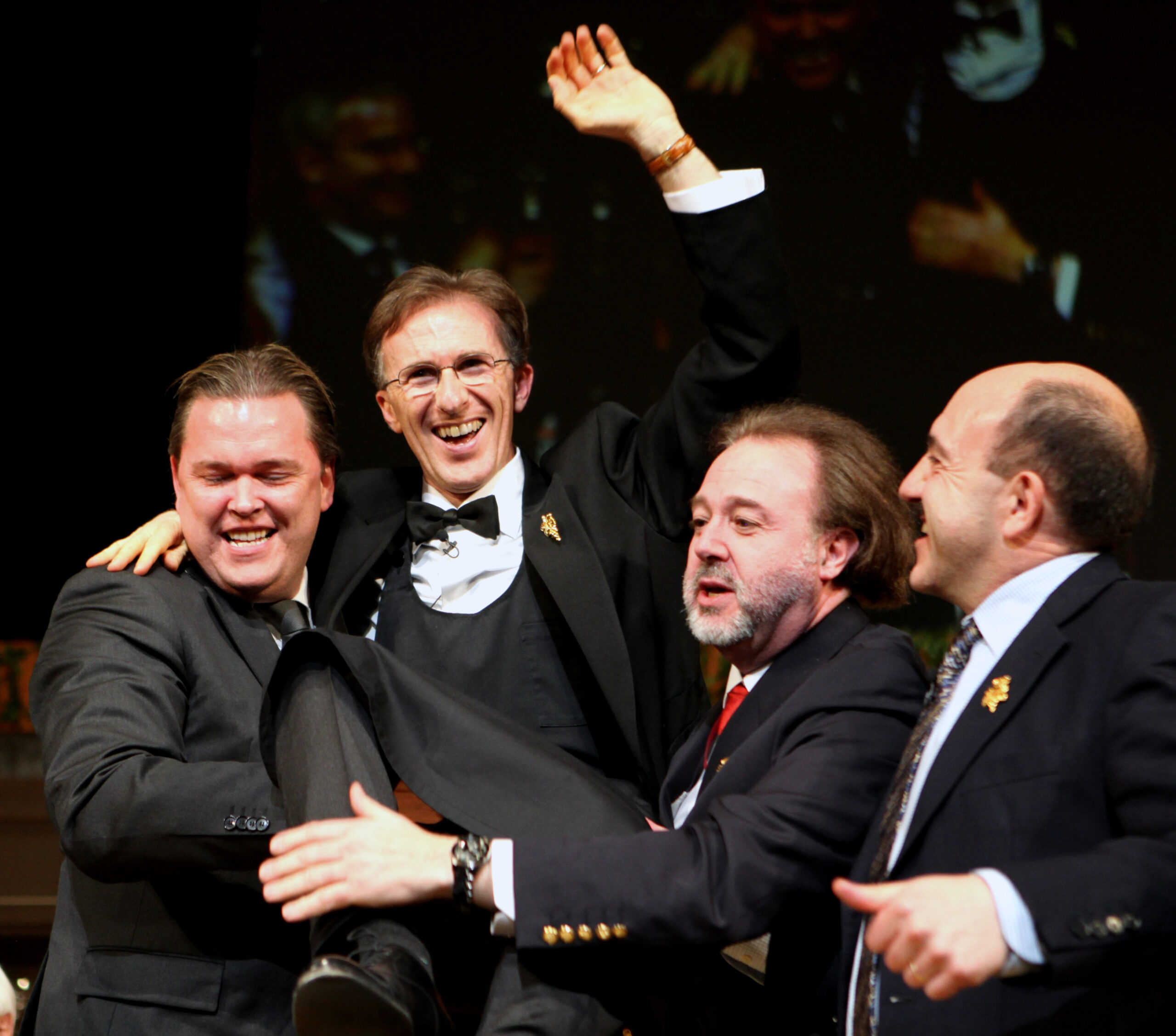
When Paolo Basso, who competed for Switzerland despite being born in Italy, heard his name announced as the ASI Best Sommelier of the World in Tokyo in 2013, his first emotion was, naturally, immense joy. It was a distinction he had pursued for nearly two decades, following an extraordinary competitive journey that included winning the titles of Best Sommelier of Switzerland and Best Sommelier of Europe, along with previous appearances on the world stage.
Yet, alongside the elation, Basso felt something else: relief.
“I had dreamed of this title for many years,” he recalls. “But I also felt a sense of liberation. To reach this level, you must live a crazy life. You dedicate your personal time, your energy and, of course, your money to the project. After 18 years of competition, I was happy to be done.”
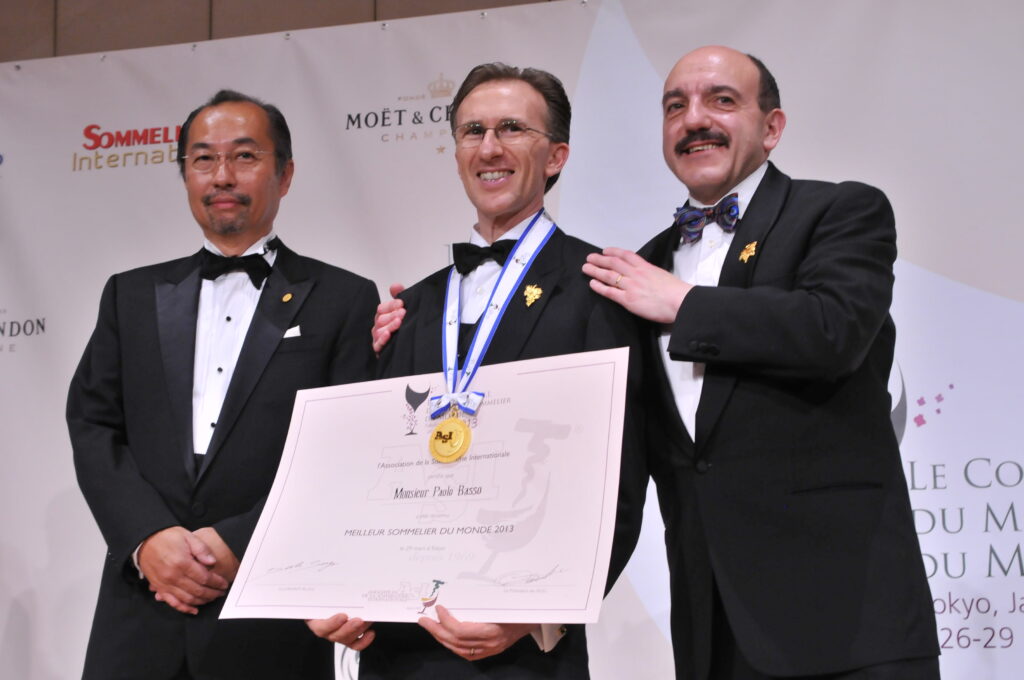
Post victory he thought he would be able to return to something resembling normality. He quickly discovered otherwise.
“The competition was over, but another life was just beginning. It was another life that I did not know how to manage. I had to learn (this new life) day by day.”
Winning opened doors, but it also brought a new weight of expectation. Suddenly, Basso was being invited to address conferences filled with accomplished leaders from business, science and other fields. He began to ask himself what these audiences expected from someone carrying the title of ASI Best Sommelier of the World.
“There is no school where you can learn how to manage that responsibility,” he says. “You have to understand how to carry the weight of the title.”
Over time, he discovered that his experience and knowledge were more than sufficient to command the respect of these audiences, with one playful exception. His home country of Italy.
“In Italy, everyone is a wine expert,” he jokes. “If someone is born in Italy, they are the greatest wine expert in the world.”
Reflecting on the upcoming ASI Contest Best Sommelier of the World in Lisbon, Basso acknowledges the world of sommellerie he entered is very different than it is today. Even preparing for a contest then versus now was different.
“When I started competing, the challenge was finding information,” he says. “Then we entered a second period when we had access to a great deal of technical information. Today, we have a lot of commercial information.”
According to Basso access to information is not an issue for the modern sommelier. Vast quantities of information are instantly available through digital platforms, online courses and social media. The greater challenge is determining whether that information is accurate, independent and professionally useful.
“We have a lot of commercial l information designed to sell a bottle of wine, but that does not necessarily explains the contents of the bottle to a professional,” says Basso. “The challenge today is to think with your own mind and to be critical. You must ask whether the person (if even a real humand being) providing the information is truly competent or simply skilled at spreading a message.”
This ability to distinguish knowledge from marketing has become one of the defining skills of contemporary sommellerie. According to Basso, sommeliers themselves are not immune to the seduction of a compelling narrative.
“We are also victims of storytelling,” he warns.
Storytelling can give a wine identity and connect it to a place, producer or philosophy. But when the story becomes more important than what is in the glass, the sommelier risks abandoning one of the profession’s fundamental responsibilities: assessing quality.
“For some years, sommeliers sold wines with problems such as acetic acid, oxidation, Brettanomyces or unwanted refermentation in the bottle, because those wines had very good stories to tell,” he says. “With storytelling, you can sell the first bottle. But if the wine is not good, you will not sell the second.”
For Basso, critical thinking, and going beyond the first layer of storytelling, is only one part of the profession’s necessary evolution. Sommeliers must also recognize their commercial importance.
“We have to realize that we can be key players in the wine market,” he says. “We are not only people who serve wine, match food and wine, or make recommendations. We can also be central to building customer loyalty.”
In a difficult economic environment, the long-term success of a restaurant depends on its ability to inspire guests to return. Basso believes the sommelier can play an essential role in creating that loyalty, but only if the profession changes how it defines success.
“When I started, the sommelier was someone able to select and buy wine. Today, we have to also be wine sellers. The most important thing is being able to sell.”
This does not mean pushing expensive bottles or abandoning professional integrity. It means selecting each wine with a clear understanding of its place on the list, its potential audience and how it will contribute to the restaurant’s financial health.
“When we buy a wine, we should be able to say, ‘I understand this wine. I know exactly what I can do with it and to what kind of customer I can sell it.’”
Too often, he says, sommeliers build lists around their own preferences or acquire large quantities of esoteric wines without considering whether their guests will understand or enjoy them. That behaviour has contributed to a perception among some restaurateurs that sommeliers are enthusiastic buyers but ineffective sellers.
Basso wants to change that perception.
“I would like restaurant owners to say, ‘I want to hire a sommelier because that person will manage the wine program perfectly.’ We must no longer be seen as the crazy people who buy special wines but cannot sell a bottle.”
Understanding the psychology of the guest is central to this commercial role. A sommelier must listen carefully enough to recognize when someone wants the reassurance of a familiar label and when they are open to discovery.
“We do not simply have to follow the customer’s desires,” he explains. “We must understand those desires and perhaps guide the customer toward discovering something new. If someone only wants to drink a famous label, we sell the label. That is not a problem. But many customers are open to discovering new wines, appellations and countries, perhaps with an excellent relationship between price and quality.”
This expanded role also requires the profession to move beyond its historical association with formal, ‘Michelin-starred’ restaurants.
“Wine culture does not belong exclusively to Michelin-starred restaurants,” Basso says. “We can add value anywhere: in a wine bar, a wine shop, a bistro, a casual restaurant or, if we speak about Italy, a trattoria.”
Wherever there are guests interested in wine, there is an opportunity for a sommelier to create value. Basso even suggests that restaurants rethink the traditional division of front-of-house responsibilities by assigning one person specifically to beverage sales.
“Give the waiters more responsibility and more tables, but do not also charge them with the full responsibility of selling wine. Dedicate one person, the sommelier, to it. Why have someone specialized in selling food, but no one specialized in selling wine?”
It is a practical proposal rooted in business realities. A well constructed beverage program can represent a significant source of restaurant revenue and, in Basso’s view, deserves dedicated expertise.
As wine and beverage alcohol consumption decline in many established markets, particularly among younger adults, Basso believes sommeliers can help reconnect people with wine. To accomplish this, however, the profession must learn to communicate more simply.
After decades spent acquiring advanced knowledge, sommeliers can easily forget how intimidating the language of wine sounds to a beginner. Detailed discussions of slope orientation, geology, clones and rootstocks might fascinate specialists, but they can also convince a newcomer that wine is not meant for them.
“If I am a beginner and this is my first wine dinner, I understand nothing,” Basso says. Without someone speaking in a language that can be understood by the consumer, there is a good chance they might not return.
As for how to describe wine for the new generation, his alternative begins with three words: earth, sky and time.
“Wine is made from the earth, thanks to the sky, and the third ingredient is time. Of course, there is also the human factor managing those three elements.”
This deceptively simple explanation connects wine to the values many younger consumers already embrace: authenticity, agriculture, nature, sustainability and a sense of place.
“We cannot produce wine anywhere, whenever we want, in whatever quantity we want,” he says. “Good wine takes time. We have to explain this. I think young people who are connected with nature and sustainability will become interested in wine again when they understand that wine is connected to its region of origin.”
As the next generation of competitors prepares for Lisbon, Basso’s advice is not to become consumed by the title itself.
“Do not chase the title,” he says. “Use the competition as important training that will make you more competent in wine.”
Only one candidate can become ASI Best Sommelier of the World, and from Lisbon onward, the contest will be held only once every four years. Building an entire career around winning is therefore a risky proposition. The knowledge, discipline and resilience gained through preparation must have value beyond the final result.
As for the skills require to succeed, Basso believes the qualities required have not fundamentally changed: curiosity, discipline, method, humility and energy. However, he notes candidates cannot wait for employers to finance every tasting or visit to a wine region. They must be prepared to invest their own time and take responsibility for their own development. While technology may have made training more democratic, allowing sommeliers from non-wine-producing countries to access the same information as those living among vineyards, it isn’t enough. For Basso access to information alone is not mastery.
“One thing is having information on an electronic device,” he says. “The difficulty is putting that information into your mind.”
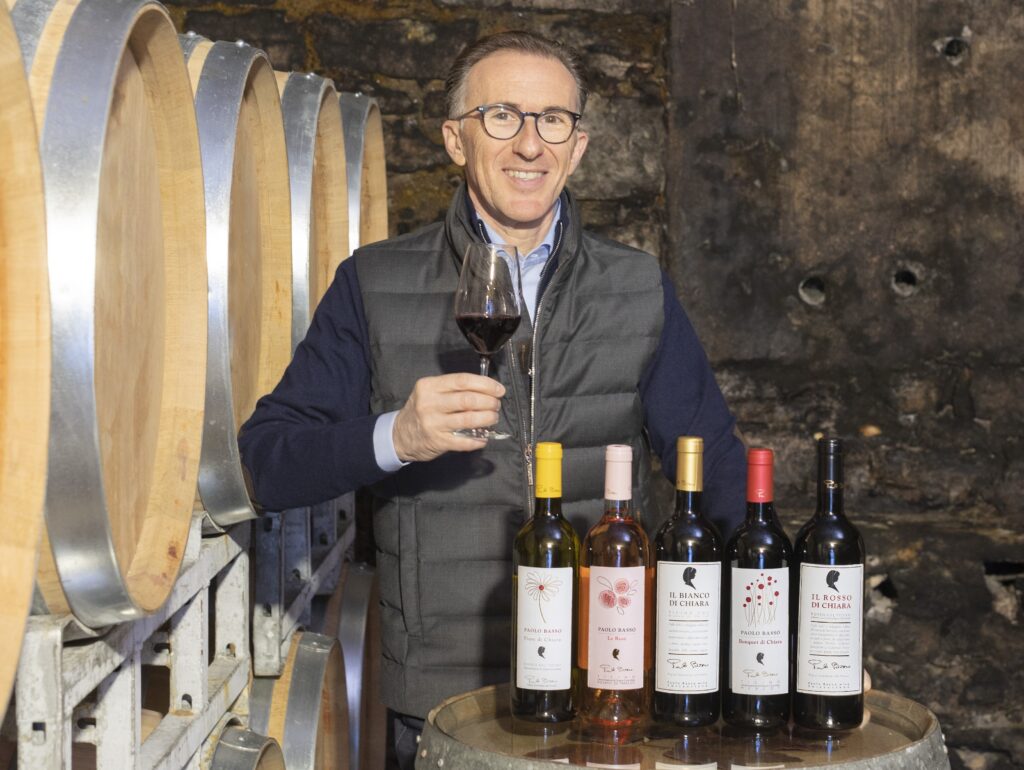
Basso’s own evolution did not end in Tokyo. Winning allowed him to expand his career as an educator, consultant and ambassador, and eventually to become a wine producer himself. This new perspective has allowed him to see the industry from both sides of the bottle.
When asked what he hopes his legacy will be, his answer is not limited to the trophy he lifted in 2013.
“I hope people can say that I helped update the profession,” he says. “I want sommeliers to understand that they can be active players in the wine market, not passive players.”
It is a timely message for those travelling the Road to Lisbon. The future of sommellerie will not be secured by knowledge alone. It will belong to professionals who can evaluate information critically, communicate wine clearly, understand their guests and transform expertise into meaningful experiences and sustainable businesses.