

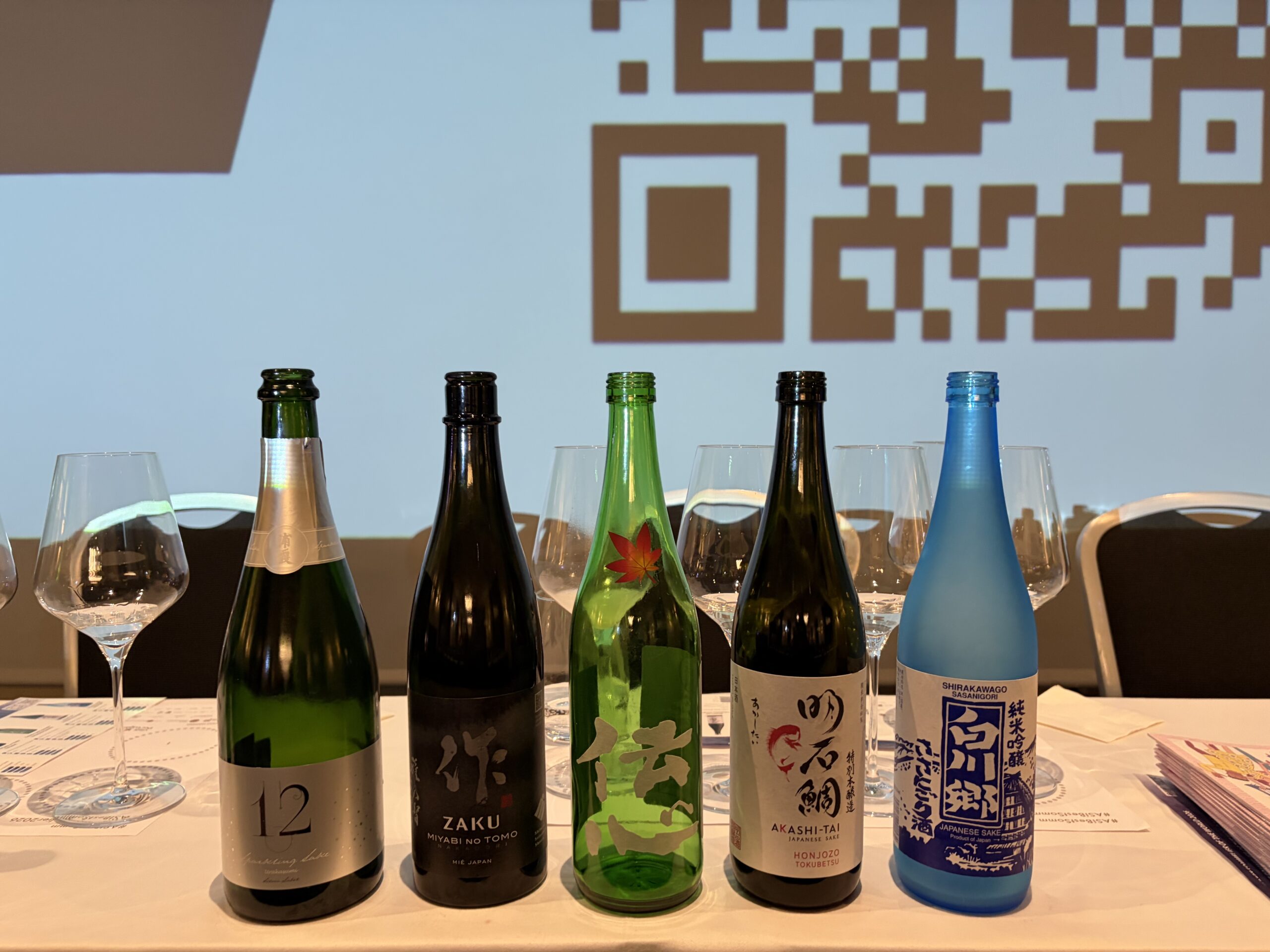
Sake flavour and food pairing
Sake offers sommeliers a way to build pairings through savoury depth, aroma and texture. For those unable to attend the sake masterclass at the ASI world competition, this digest revisits key ideas from the presentation Sake Uncovered — A Deep Dive and connects them with practical pairing suggestions. Understanding what creates sake’s flavour makes it easier to select a bottle for the dish, whether the kitchen is Japanese, French or Italian.
Koji builds the foundation of flavour
Sake begins with rice, but rice starch cannot be fermented directly by yeast. Koji, steamed rice cultivated with Aspergillus oryzae, supplies enzymes that break starch into fermentable sugars. Yeast converts those sugars into alcohol. In sake’s multiple parallel fermentation, these processes take place simultaneously in the same mash.
Koji also supplies enzymes that break down rice proteins into peptides and amino acids. This second role is particularly relevant at the table. Amino acids contribute to sake’s taste and depth; glutamate is associated with umami, the savoury taste familiar from mushrooms, mature cheese and stocks. Different amino acids have different sensory effects, so amino acid content should not be treated as a simple measure of umami or quality.
The masterclass placed umami alongside temperature and sensory profile as a key consideration for pairing. Familiar European ingredients provide an immediate point of reference: Parmigiano Reggiano, tomatoes, mushrooms and beef all appeared among its examples of umami-rich foods. This does not mean that any savoury sake will suit every savoury dish. The concentration of a jus, the salt in a cheese and the sweetness of a roasted vegetable change the balance. Think of the sauce and seasoning as part of the pairing, rather than treating the protein as the only guide.
For pairing, the useful question is how this savoury character behaves alongside food. A sake with depth and a rounded palate can extend the flavour of a sauce or complement the substance of a creamy dish. Sake generally has less pronounced acidity than wine, but its balance still depends on acidity, sweetness, alcohol and other components. Taste the whole profile rather than selecting on umami alone.
Yeast gives fruit aromas their shape
Yeast contributes more than alcohol. During fermentation it produces aroma compounds, including two esters highlighted in the masterclass: isoamyl acetate and ethyl caproate. These two esters are representative components of ginjo-ka, the fruity fragrance characteristic of ginjo sake. Isoamyl acetate is associated principally with banana; ethyl caproate commonly evokes apple. In the glass, these compounds form part of a broader aromatic picture that may suggest melon, pear or other fruits.
These are fermentation aromas, not evidence that fruit has been added. Yeast selection and fermentation conditions influence their expression. They are especially useful reference points when describing fruity ginjo styles, although neither a classification nor a polishing ratio tells the whole sensory story.
At the table, aromatic intensity needs to match the dish. A fragrant sake may connect with a fruit or herbal element, but an exuberant nose can compete with delicate ingredients. Equally, a fruity aroma does not necessarily mean a sweet palate. Assess sweetness separately, alongside acidity, body and the finish, before deciding whether the pairing works.

Pairing suggestions for contemporary cuisine
Seafood offers a useful starting point for exploring sake pairings. With crustaceans, a delicate sake can complement their natural sweetness and extend the finish without overwhelming their subtle flavours. Consider the weight and aromatic intensity of the sake alongside the texture of the seafood, allowing its sweetness to remain at the centre of the pairing.
Herbs offer another point of connection. Some daiginjo styles display a fresh, green character reminiscent of young bamboo, alongside their fruit aromas. This refreshing quality can echo the freshness of herbs and bring aromatic continuity to a dish. The aim is to find a shared impression of freshness, while keeping the intensity of the sake and the herbs in balance.
Oysters invite pairings through their marine salinity and umami. A sake with a clean finish and gentle savoury depth can accompany these qualities while preserving the oyster’s delicacy. Cheese offers a related opportunity: its umami and saltiness can find a complement in sake’s savoury character, while a rounded texture can harmonise with creaminess. Across these pairings, aroma, taste and texture work together; tasting the food and sake side by side reveals which connection is most convincing.
Beyond seafood through texture and maturity
Further pairing suggestions extend into French and Italian cooking: a fuller, creamy sake with fish in beurre noisette, creamy risotto; a more mature sake with reduced braised meat, roasted vegetables, aged cheese, or grilled and smoked flavours.
These combinations offer a useful framework: match the sake’s weight to the dish’s texture, then seek an aromatic connection in the butter, sauce, roasting or maturation. Mature sake can bring evolved, nutty or spicy notes, but ageing does not produce one uniform style. Taste the bottle before assigning it a role.
Use temperature as part of the pairing
Temperature was another central theme of the masterclass. Chilling can suit a delicate, aromatic sake; room temperature or gentle warming may reveal a different balance in a savoury, fuller style. Temperature offers a practical tool for adjusting aromatic expression and texture to suit the dish. Warming is not an automatic improvement: compare the same sake at different temperatures with the food.
For a practical starting point, identify the dish’s dominant texture, savoury depth and aromatic accents. Choose a sake of suitable weight, test the combination, then adjust service temperature. A small pour within a tasting menu gives guests an accessible introduction. The aim is to broaden the sommelier’s choices through an understanding of fermentation and an attentive tasting of the finished dish.