
For months before arriving in Lisbon, Nikolai Haram Svorte’s life followed a demanding rhythm: work, study, practise, repeat. Evenings and weekends belonged to preparation. Holidays became training opportunities. Social plans largely disappeared.
“I’ve sort of sacrificed pretty much any social interaction for the last, I don’t know, four months at least,” he says.
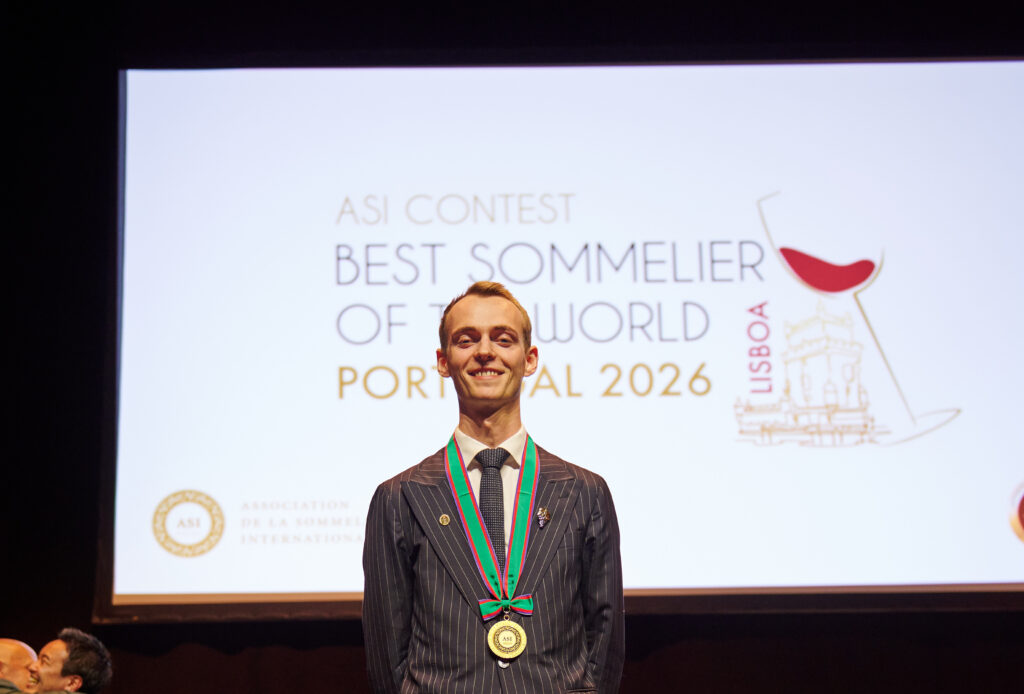
That commitment would culminate in the Norwegian sommelier winning the title of ASI Best Sommelier of the World 2026. Yet his account of the journey is as much about doubt, self-awareness and learning to accept help as it is about discipline. Behind the precision on stage was someone who had questioned whether to continue competing, wrestled with how to present himself and, ultimately, found a way to succeed on his own terms.
Speaking on ASI’s A Sommelier’s Insight podcast, Svorte reflects candidly on what it took to reach the top and what happens once a goal that has occupied so much of your life is finally achieved.
Wine was not Svorte’s first ambition. Football (soccer), music and even engineering figured among his early possibilities. After finishing high school, he spent time pursuing music while working part-time in a grocery store. An interest in wine, sparked around the age of 18 or 19 and encouraged by restaurant visits, gradually offered another direction.
In 2017, he enrolled in WSET Level 2 before progressing to sommelier studies at the Culinary Academy of Norway. His first restaurant opportunity came when a promising establishment opened in his hometown on Norway’s west coast, just as he was nearing the end of his qualification.
“I sort of became a sommelier first and then I began working in restaurants,” he says.
Competition became another outlet for his curiosity and determination. By his reckoning, Lisbon was his fifteenth contest. Across Norwegian and Nordic competitions, he had experienced the progression from third place to second and, eventually, first. Seeing improvement gave him a reason to keep investing.
But progress did not always feel reassuring. After finishing second in the Nordic competition for a second time, he came close to publicly calling it quits.
“I sketched an Instagram post announcing my retirement,” he recalls.
Part of the difficulty was finding a competitive identity. Naturally shy and introverted, Svorte often found himself alongside more outgoing competitors with an instinct for performance. He questioned whether success required him to become someone else.
Over time, he developed an approach grounded in his strengths.
“I’ve never been the most entertaining one to watch, but I’ve always tried to be the most precise and technical.”
The work behind Lisbon stretched back much further than the final months of intensive study. In March 2020, an invitation to join Norway’s national sommelier team came with a suggestion: keep a monthly training diary.
Svorte continued recording his studies for the next six and a half years. The diary’s greatest value, he says, was the accountability it created. Having to document and submit his work encouraged him to put in the hours.
His professional circumstances also helped. Having moved from restaurant service into importing, with a focus on grower Champagne, he found he had more energy for meaningful study after work. The transition brought closer contact with producers, opportunities to travel and taste, and a different understanding of the wine business.
There were compromises. Without daily restaurant service, he needed to rebuild practical fluency through training in restaurants. He also credits an employer who understood the value of competition and provided both financial support and flexibility.
For all the solitary hours, however, this was not an individual undertaking.
Svorte acknowledges that he had previously been hesitant to accept assistance. In the year before Lisbon, he made a deliberate effort to change that. He worked with his coach, trained with previous Norwegian candidate Francesco Marzola, and drew on colleagues’ expertise in sake, cocktails and beer. Acting classes and sessions with a psychologist formed part of the preparation, too.
Then came a period of consolidation. After months of receiving advice, he spent the final stretch working largely alone, deciding what to absorb and how to apply it.
“You need to get a lot of input,” he says, “but at some point, you also have to sort of say I need some time to process this as well.”
For someone who describes himself as introverted, the public stage might seem the most intimidating part of a world championship. Svorte found the earlier rounds more frightening: the conference rooms, compressed tasks and limited opportunities to demonstrate his abilities.
On stage, the lights helped the audience recede. The challenge became concentrating on the work.
Even so, the opening of the final was difficult. Going first, he felt he had not fully settled into the moment. During the mise en place task, he failed to identify cork taint for a wine served under screwcap.
“I tasted the wine, I felt it was off,” he recalls, “but I somehow convinced myself that it wasn’t as it was served under screwcap.”
He had also noticed flat Champagne and an overly warm red wine but questioned whether all three wines offered by the glass could have problems. For Svorte it was more of a misinterpretation of the task than lack of recognition.
Later, in the blind tasting, he trusted himself more fully. Faced with three red wines identified in the interview as Nebbiolo, he committed to his conclusions.
“I just tried to follow my first instinct and to not second guess myself.”
The performance carried particular meaning because it fulfilled something he had imagined during preparation.
“I had dreamed of winning the competition by nailing blind tastings,” he says. “I was very proud of being able to do it like that.”
Still, leaving the stage did not bring certainty. He felt some service tasks had been slow, even where his execution was clean and precise. Watching fellow finalists Pascaline Lepeltier and Wataru Iwata, he could recognise their strengths alongside his own. With ten tasks and no clear sense of their relative weighting, predicting the result was impossible.
Instead, he made peace with the performance he had given.
“I felt like I did my best.”
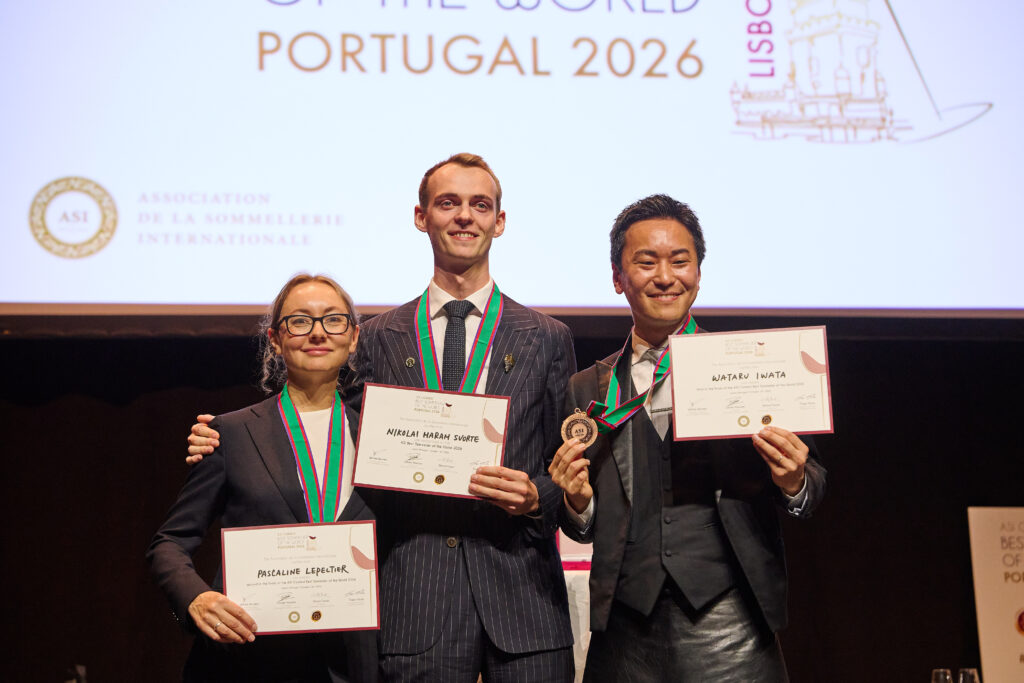
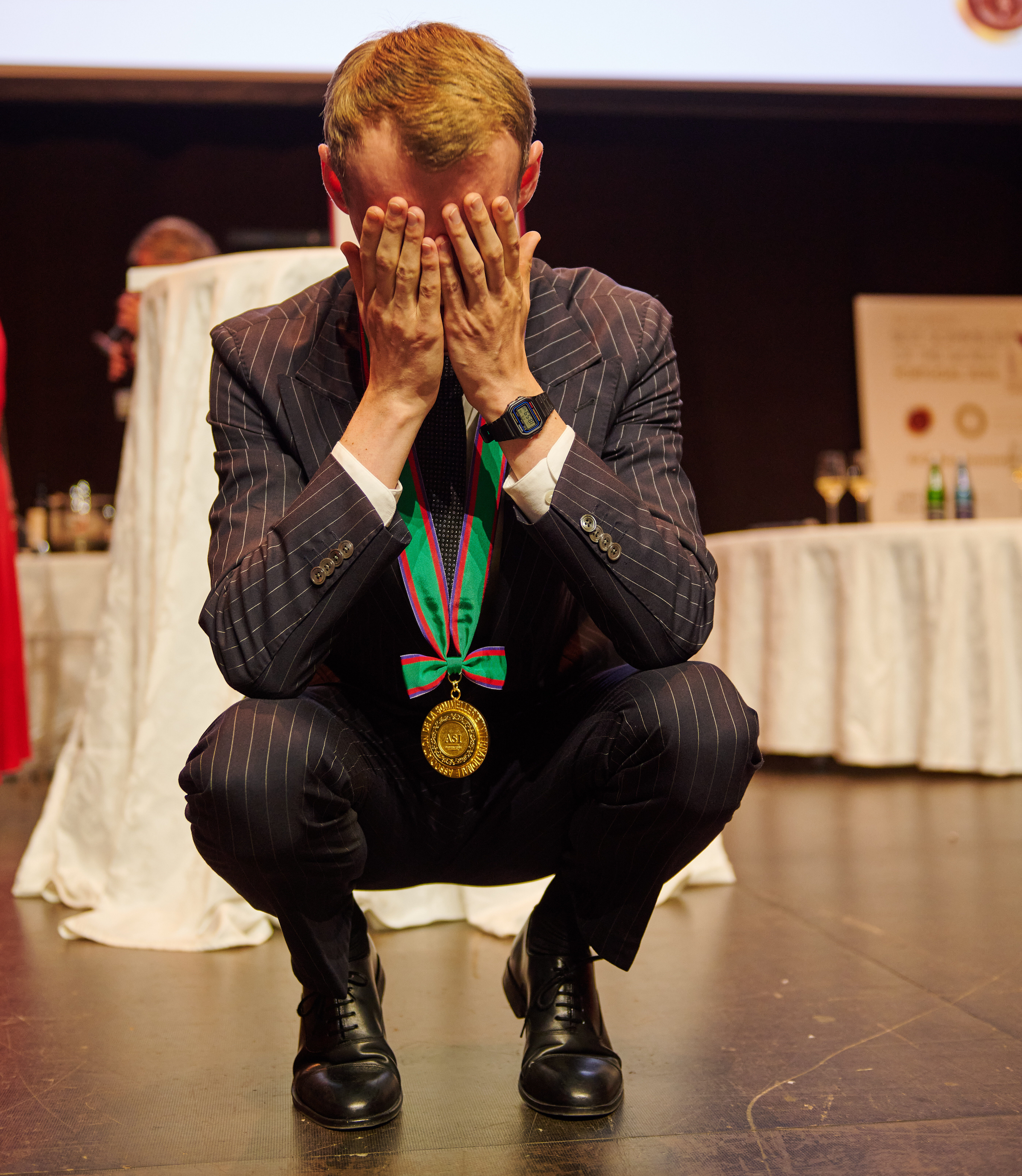
Victory brought surprise, disbelief, happiness and pride. Sharing it with his coach, association president and employer made the moment especially emotional.
It also brought an unexpected weight.
“The expectations just seemed to grow,” he says.
The relief he had imagined did not arrive quite as anticipated. After years of organising life around the next competition, winning required its own adjustment. In the days that followed, he experienced emotional highs and lows while beginning to understand the responsibilities attached to the title.
He hopes to use it to support ASI and the Norwegian sommelier community. His success, he believes, reflects a depth of talent at home, where several competitors have pushed him closely for years. He also credits Norway’s broad exposure to international wines and national competitions that prepared candidates for the scope of contemporary ASI challenges.
For now, however, there is no immediate plan to pursue another qualification. Having spent so long working towards the next objective, Svorte is deliberately allowing himself time to appreciate this one.
He wants to reconnect with friends and family, recover some of the social life preparation displaced, and perhaps read something other than wine literature for the first time in years.
“I feel pretty content right now,” he says, “so there’s no rush.”