
In wine, few credentials carry more mystique than Master Sommelier and Master of Wine. They are often spoken of as the twin summits of professional achievement: one rooted in hospitality, service and applied tasting under pressure; the other in academic rigour, written analysis and a broad strategic understanding of the global wine trade. Very few people have ever climbed both.
Doug Frost earned the Master Sommelier title in 1991 and the Master of Wine in 1993. More than three decades later, Benjamin Hasko became only the fifth personin history to achieve both titles, completing the MW in 2024 after passing the Master Sommelier examination on his first attempt in 2016.
That rarity alone is impressive. But the more compelling story is not simply that Frost and Hasko reached these heights. It is why they chose to pursue both, what they discovered along the way, and what their journeys reveal about the evolving nature of sommellerie.
At a glance, the distinction between the Master Sommelier and Master of Wine pathways appears straightforward. The MS is synonymous with service: a world of dining rooms, guest interaction, precision under pressure, and a tasting format that demands rapid, accurate conclusions. The MW, by contrast, is often framed as academic: essays, research papers, and a deep exploration of viticulture, winemaking, and the business of wine. Yet both Frost and Hasko are quick to point out that this binary oversimplifies reality.
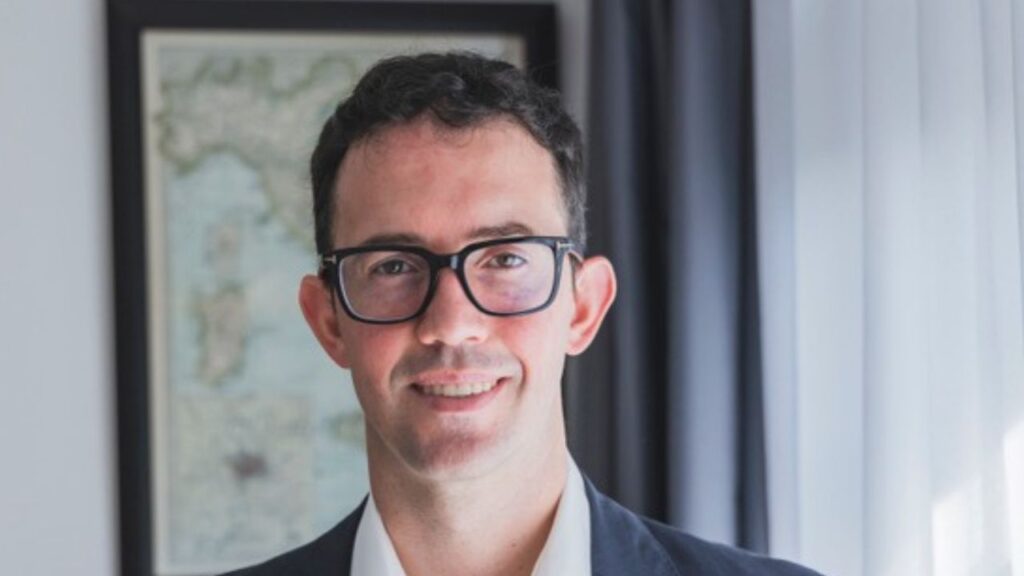
“The MS teaches you how to make decisions quickly and communicate them clearly in a hospitality context,” says Hasko. “The MW forces you to slow down, question assumptions, and justify your conclusions with evidence.” Frost echoes this idea, noting that each programme develops a different kind of intelligence. “One is not harder than the other,” he says. “They are simply testing different muscles.” Together, they form a more complete understanding of wine, one that balances instinct and analysis, performance and reflection.
For Frost, the decision to pursue both titles was less strategic and more organic. Coming of age in the American wine scene of the late 1980s and early 1990s, he saw each qualification as an opportunity to deepen his understanding of wine from different perspectives. “There wasn’t a roadmap,” Frost explains. “It was about curiosity. Each programme offered something the other didn’t.” For Hasko, the journey was more deliberate. Having already achieved the MS, he found himself drawn to the intellectual depth of the MW. “The MS gives you a tremendous toolkit for working on the floor and engaging with guests,” he says. “But I wanted to explore wine beyond service, to understand the broader context: production, markets, and long-term trends.” In both cases, the motivation was not prestige alone, but a recognition that each qualification illuminates different dimensions of the same subject.
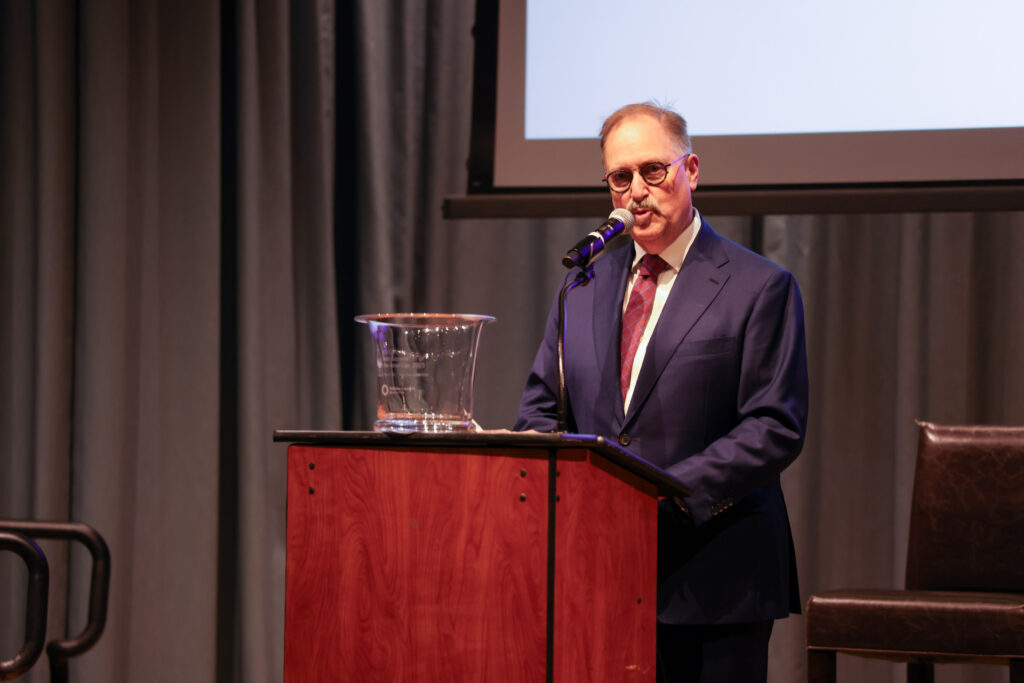
Pursuing either the MS or the MW is a demanding, multi-year commitment. Attempting both requires not only technical ability, but also resilience, time management, and a willingness to navigate two very different cultures of learning. The MS demands precision and consistency under intense time pressure. Blind tastings are rapid, structured, and unforgiving, while service examinations test not only knowledge, but composure, empathy, and the ability to perform flawlessly in front of guests. The MW, by contrast, is a slower burn, requiring candidates to demonstrate depth of knowledge across a wide range of topics, from vine physiology to global trade dynamics. The written theory papers demand not only recall, but critical thinking and the ability to construct clear, persuasive arguments. “Switching between those modes is one of the biggest challenges,” Hasko notes. “You go from making a call in minutes to building a case over hours.” Both men emphasise that success in either programme requires more than knowledge. It requires discipline, humility, and an ability to learn from failure.
For the broader wine and hospitality world, the small group of professionals who hold both titles offers something uniquely valuable. They bridge two often separate conversations: the practical realities of service and the theoretical frameworks that shape how wine is produced, marketed, and understood. This dual perspective is increasingly relevant as the role of the sommelier continues to evolve. Today’s sommeliers are expected not only to guide guests, but also to engage with sustainability, global supply chains, emerging regions, and shifting consumer expectations. The profession is no longer confined to the dining room. It exists at the intersection of hospitality, education, and the global wine business. “The best sommeliers today need to be translators,” Frost suggests. “They translate between the vineyard and the guest, between the producer and the market.” Holding both the MS and MW titles is not a prerequisite for that role, but the combination illustrates what is possible when those perspectives are fully integrated.
The journeys of Frost and Hasko also reflect a broader shift within the profession. Where the MS and MW were once seen as distinct, almost parallel tracks, there is now greater recognition of the value in cross-pollination between service and academic study. Educational pathways are expanding, access to information is greater than ever, and a new generation of sommeliers is approaching the profession with a more holistic mindset. “There is less of a divide than there used to be,” Hasko observes. “People are more open to learning across disciplines.” That openness may not necessarily lead to a dramatic increase in the number of dual MS/MW holders, as the challenges remain significant and the commitment required is immense, but it does suggest a future in which the boundaries between different forms of wine education continue to blur.
Ultimately, both Frost and Hasko are careful to place their achievements in perspective. While the MS and MW represent extraordinary milestones, they are not endpoints. “They are tools,” Frost says. “What matters is how you use them.” For Hasko, the journey itself remains the most valuable part. “The process changes how you think about wine,” he reflects. “It makes you more curious, more critical, and more aware of how much there is still to learn.” That mindset may be the true common ground between the two peaks. Not the titles themselves, but the pursuit of knowledge, understanding, and the ability to share that with others.
In the end, the twin peaks of sommellerie are not just about reaching the summit. They are about what you see, and who you become, along the way.