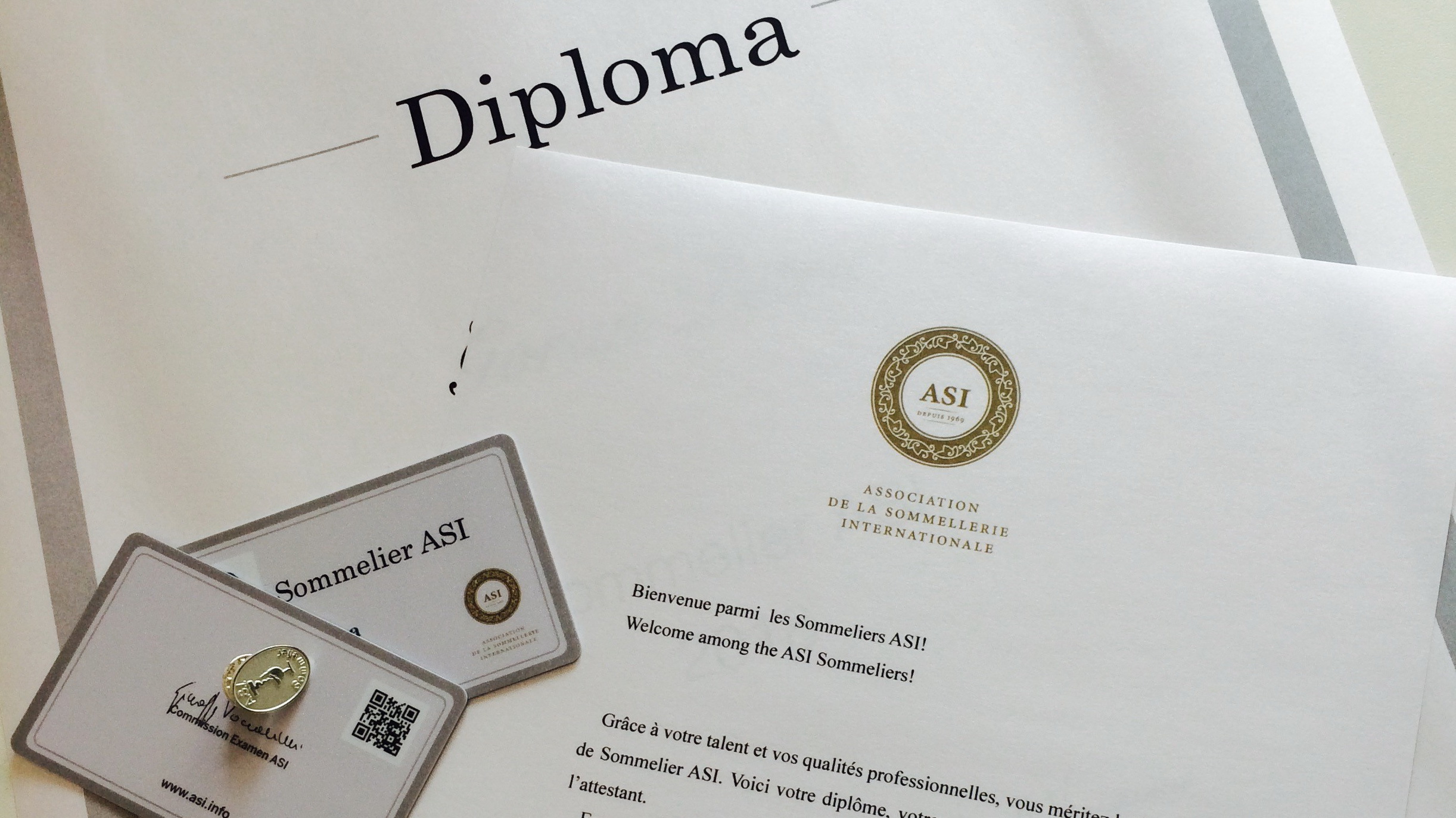
Since the launch of the ASI Diploma in 2012, the Association de la Sommellerie Internationale has steadily built one of the wine and hospitality world’s most inclusive and globally relevant systems of professional benchmarking. What began as a top-level qualification aimed at recognising excellence among sommeliers has evolved into a broader educational ladder that now reaches far beyond the traditional power centres of the profession.
The numbers tell part of the story.
Since 2012, a total of 627 sommeliers have graduated from or been granted the ASI Diploma, including those who earned it through examination and those awarded the credential by virtue of winning a continental or world championship. Every graduate is listed by name and year on the ASI website, offering a visible record of how the credential has spread across countries, cultures and generations.
That growth is no accident. It reflects a deliberate strategy by ASI to create an accessible, international standard for sommellerie that is not limited by geography, language or the economics of where a sommelier happens to live and work.
As Jean-Vincent Ridon, member of the ASI Exams and Education Committee and ASI Gold Diploma holder, explained, the original vision was never simply to create another qualification for the already established markets.
Rather, it was to serve countries where sommelier culture was still emerging.
“We wanted to offer these new countries the tools and the opportunity to be part of the global family,” Ridon said. That idea has become central to ASI’s educational mission.
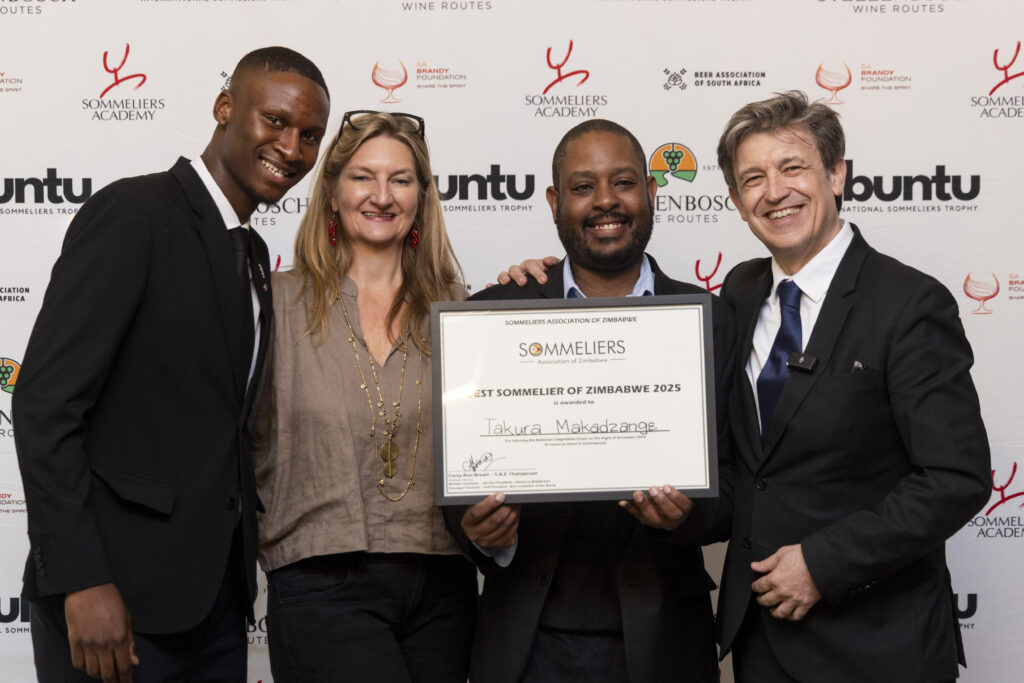
For decades, formal wine education was often concentrated in a handful of traditional centres. A sommelier in London, Paris or New York could usually find multiple paths to study, benchmark their knowledge and build professional credibility. That was not necessarily the case in places such as Zimbabwe, Kazakhstan, Vietnam, Lebanon or many parts of Africa, South America and Asia. Yet these are precisely the regions where sommellerie is now growing fastest.
ASI’s response has been to create a true pyramid of progression.
The ASI Diploma, launched in 2012, remains the organisation’s flagship credential. It is demanding by design, assessing not only theory and tasting ability but also the practical and human dimensions of service. In Ridon’s words, ASI remains rooted in the idea that sommeliers are not merely wine scholars. “We are servants of the table,” he said. “We are not wine geeks.” That distinction matters. Service, communication, etiquette, problem solving, beverage knowledge and hospitality judgement all sit at the heart of the ASI system.
But ASI also recognised that the Diploma alone could not serve the needs of the global profession. In many countries, it was simply too advanced as an entry point.
That realisation led to the development of ASI Certification 1, launched in 2021. Since its introduction, 773 candidates have graduated, with more than 1,000 estimated participants from 40 countries. Even with approximate participation figures, the scale is striking. Certification 1 has become an important first benchmark for sommeliers seeking an internationally recognised standard early in their journey.
The next step came with ASI Certification 2, launched in 2023. Already, 204 participants from 21 countries have attempted the exam, with 84 graduating. That is a strong early uptake for a newer qualification and suggests that national associations are increasingly embracing the ASI framework not only for elite candidates, but for building depth in their own sommelier communities.
Together, these numbers point to one of the most important developments in modern sommellerie: the profession is becoming more global, and its standards are becoming more accessible.
That accessibility is not only about price, though cost matters. Ridon noted that one of ASI’s great strengths is its non-profit structure. The Exams and Education Committee is volunteer-driven, with members contributing hundreds of hours of work to design, assess and improve the system. That helps keep costs at a level far below many other prestigious credentials in the wine world.
It is also about language.
One of the quiet revolutions inside ASI education has been the expansion of examinations beyond the classic dominant languages. Ridon pointed to work done in Portuguese, German, Russian, Korean and other languages, with further development underway. This is more than an operational detail. It is a philosophical commitment to inclusivity.
A great sommelier may need to be multilingual in some contexts, but talent should not be excluded simply because a candidate does not come from an English- or French-dominant environment. ASI’s model increasingly recognises that excellence in service and hospitality can emerge anywhere.
This global shift is mirrored in competition. The old assumption that top sommelier performance would always come from a predictable cluster of countries no longer holds. Latvia and Estonia have produced world-class champions. South Africa continues to rise. New energy is visible in countries across Asia, Africa and Latin America. What ASI has built through education and certification is part of the same movement: a broader, more democratic global profession.
Importantly, ASI does not position its credentials as a rival to every other form of wine education. Instead, it offers something distinct: a sommelier-centred benchmark, shaped by national associations and focused on the realities of service. That distinction matters in a world where wine qualifications can be highly respected but not always specifically designed around the daily role of the sommelier.
The next stage of this evolution is already underway. In 2026, ASI is introducing ASI Prep, an entry-level assessment designed to help candidates and national associations identify readiness for further study. For countries where Certification 1 still feels like too steep a first step, Prep provides a more welcoming gateway into structured learning. It may prove especially valuable for hotel schools, newer associations and regions where sommellerie is only beginning to formalise.
Viewed together, the numbers are impressive. But the larger significance lies beyond the statistics.
ASI has built something the profession increasingly needs: a shared international framework that values knowledge without losing sight of service, and that welcomes ambition from every corner of the world.
In doing so, it has helped redefine what a global sommelier community can look like.
Not centralised. Not exclusive. Not reserved for a handful of traditional markets. Rather a system that is connected, benchmarked and inclusive.