
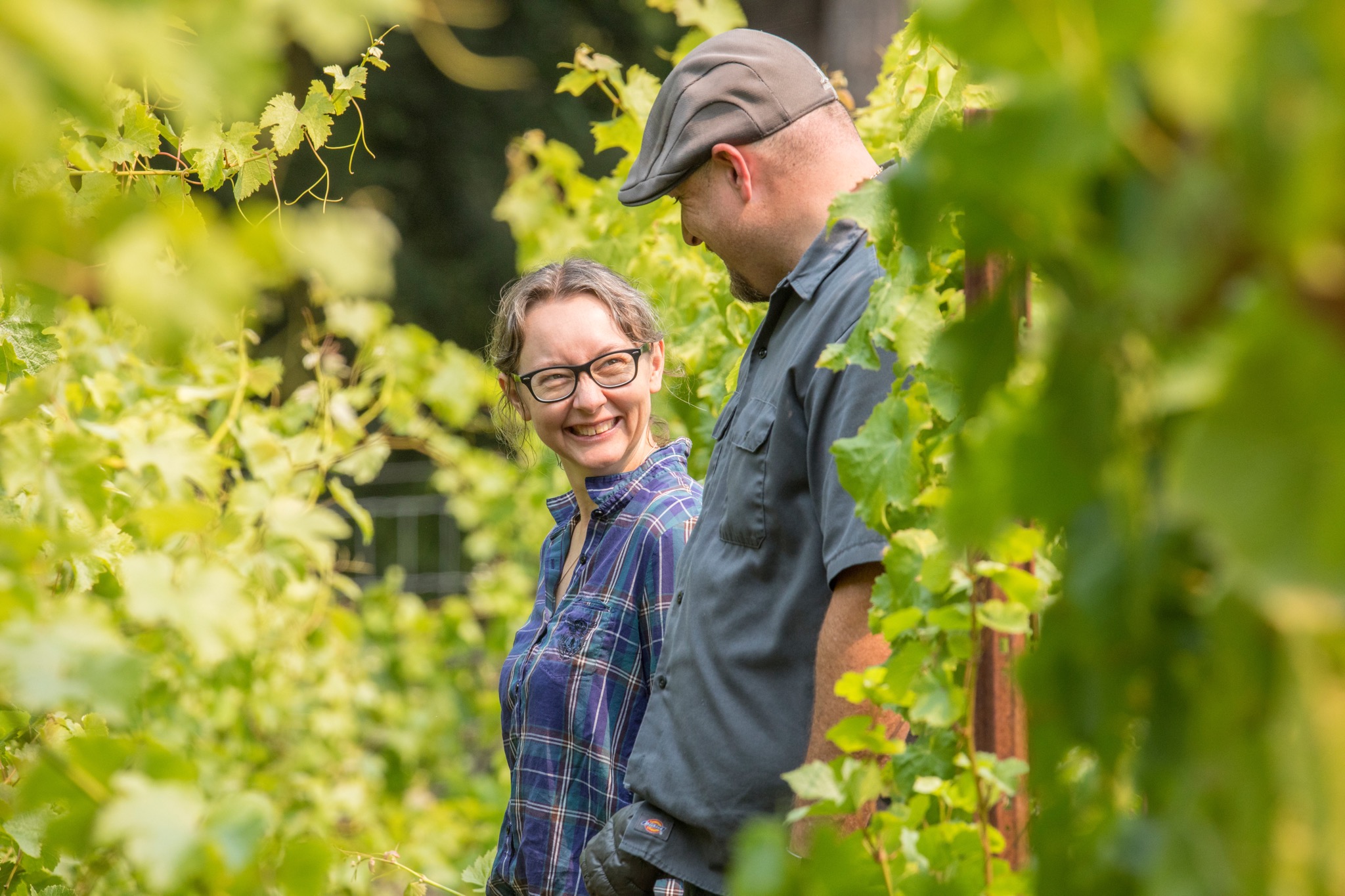
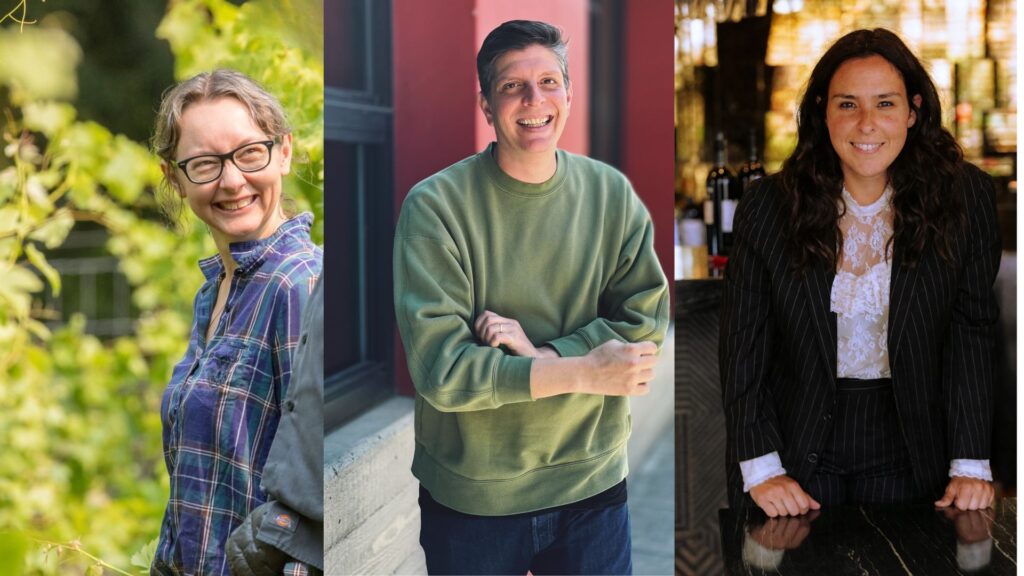
In this article, ASI has a ‘Nat Chat’ with Pascaline Lepeltier MS (Meilleur Ouvrier de France en Sommellerie, Best French Sommelier 2018, 4th place ASI Contest Best Sommelier of the World 2023, co-owner, Chambers, New York City), Joseph DiGrigoli (Wine Director, Kitchen Istanbul in San Francisco), and Claudia Rosselini (Wine Director, Bavel, Los Angeles
What began as a quiet correction within the vineyard has, over the past quarter century, evolved into one of the most consequential, and at times polarising, shifts in modern wine culture. The so-called ‘natural wine movement’ did not emerge from a vacuum, nor was it born of a single ideology.
It was, as much as anything, a reaction to the industrialisation, the homogenisation, that crept into the wine world in the 1970s, 80s, and 90s. There was a growing sense that something essential had been lost in the pursuit of technical perfection.
For sommeliers, this shift was not theoretical. It unfolded in real time, on wine lists, across dining rooms, and in conversations with guests who were increasingly curious not just about what they were drinking, but how, and why, it was made. In many ways, sommeliers became the translators of this movement, helping to frame its language and communicate its intent. But they were also, at times, participants in its excesses.
Through conversations with Pascaline Joseph, and Claudia, a more layered picture emerges. It’s a picture that acknowledges both the essential role sommeliers played in reshaping wine culture, and the moments where the profession itself blurred the lines between philosophy and style, between authenticity and acceptance.
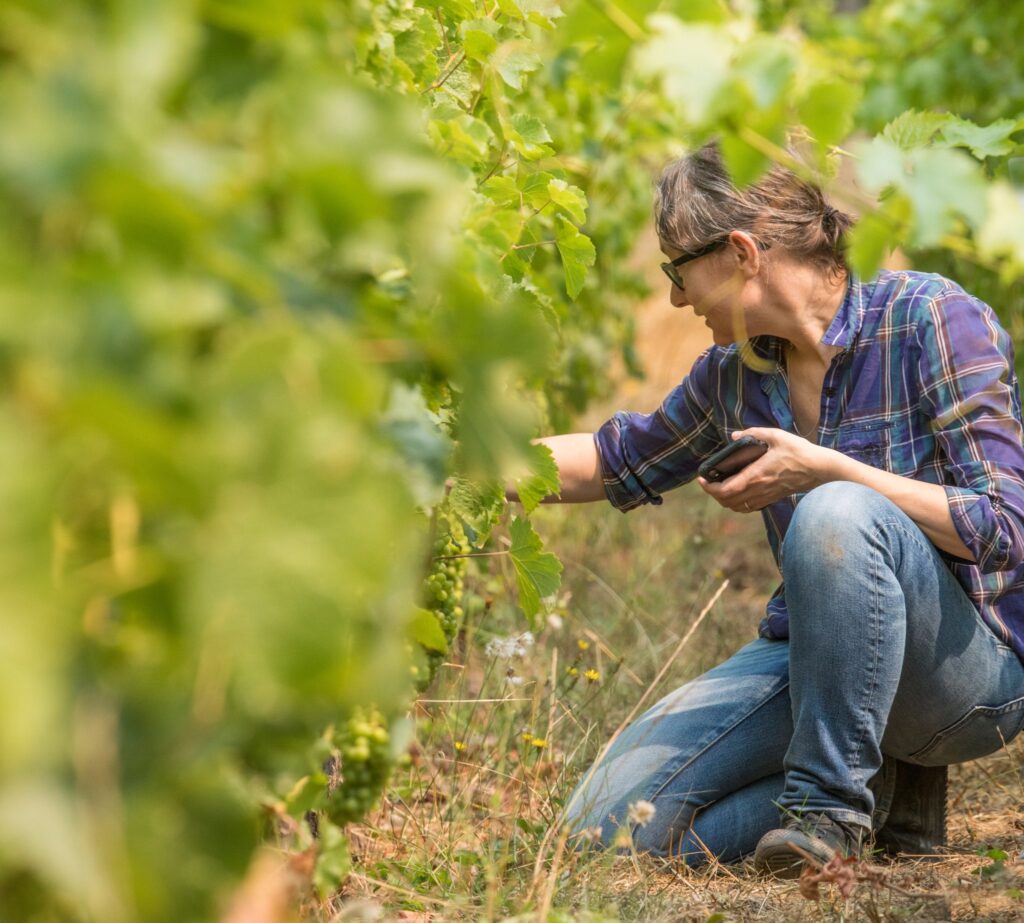 Lepeltier’s perspective begins, quite literally, in the vineyard. Long before natural wine became a global talking point, she encountered it as part of a lived experience in the Loire Valley, where questions of farming and intervention were already being explored with seriousness and intent.
“When I decided to go into wine, I was already spending some time in vineyards around Angers, which was and is considered a hotbed for low intervention wine. So, it was something I encountered very early on, both wine-wise and getting to know the people behind the wine,” she explains.
This is an important distinction. Natural wine, as it is often discussed today, can feel like a contemporary movement, but its roots are older and more practical. In regions like the Loire, the shift toward organic and biodynamic farming, and toward reducing inputs in the cellar, was not about branding, it was about responding to the conditions of the time.
“When I arrived, there were already a few people producers making wine without anything, in a low intervention way, and it (broader natural wine movement in the Loire) happened as a reaction to where the state of the wine was in the late 80s, early 1990s,” Lepeltier says.
That reaction was shaped by a growing discomfort by many with the direction wine had taken. In many parts of the world, particularly outside Europe, winemaking had become increasingly technical. Precision was prized. Consistency was paramount. The vineyard, in some respects, had been subordinated to the cellar. Even in the Loire, one of the hearts of the natural wine movement, it was spurred by a reaction to the marked rise in chemical use in the vineyards and sulphur additions in winemaking in the 1980s and 1990s. In the Loire vignerons, particularly those in sweet wine appellations, perhaps relied too much on inputs such as sulphur additions to ensure the viability and stability of their wines.
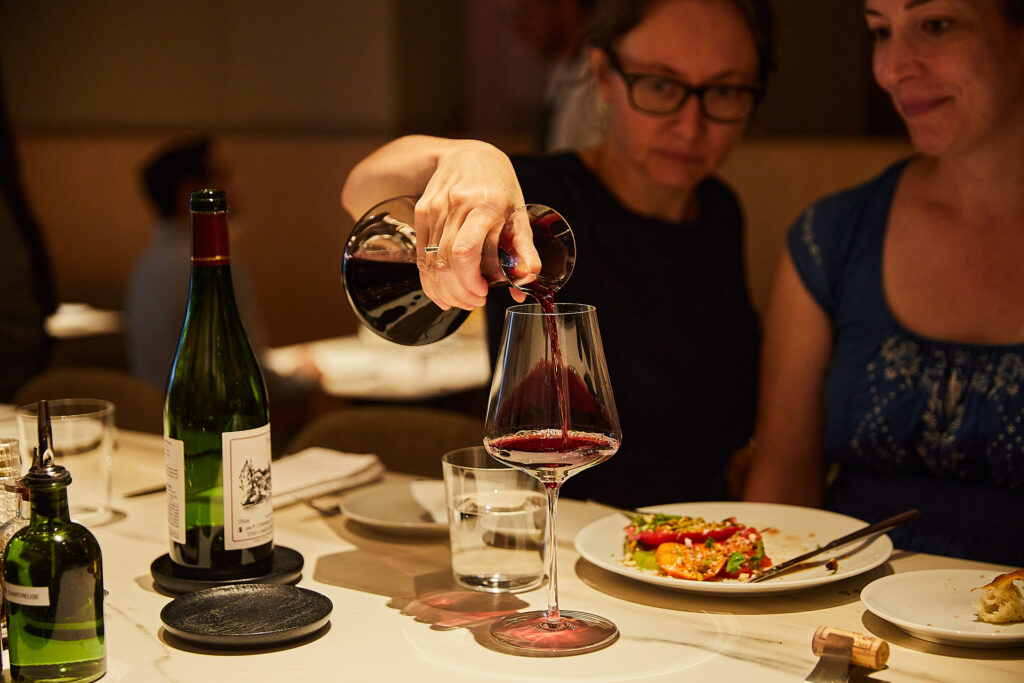
When Lepeltier arrived in New York in 2009, she encountered a market still largely defined by those values. Natural wine existed, but only at the margins, and certainly few examples outside of Coturri in Sonoma.
“You had some very famous restaurants or wine bars, but they were the exception, you had to hunt them,” she recalls.
At that moment, the role of the sommelier became critical. If natural wine was to move beyond niche curiosity, it needed advocates. It needed people like Lepeltier willing to take risks on unfamiliar producers, to explain unconventional flavours, and to reframe expectations around quality.
In the United States, that process unfolded over roughly a decade. DiGrigoli describes it as a kind of insurgency, a pushback against the dominant paradigm.
“From maybe 2008 to 2018 this insurgency came in to sort of explode the hegemony of industrial wine,” he says.
For many sommeliers, this was not simply about rejecting one style in favour of another. It was about expanding the conversation. Natural wine introduced new criteria for evaluation: farming practices, fermentation choices, environmental impact. It challenged the idea that consistency equated to quality, and it opened the door to a broader range of expressions.
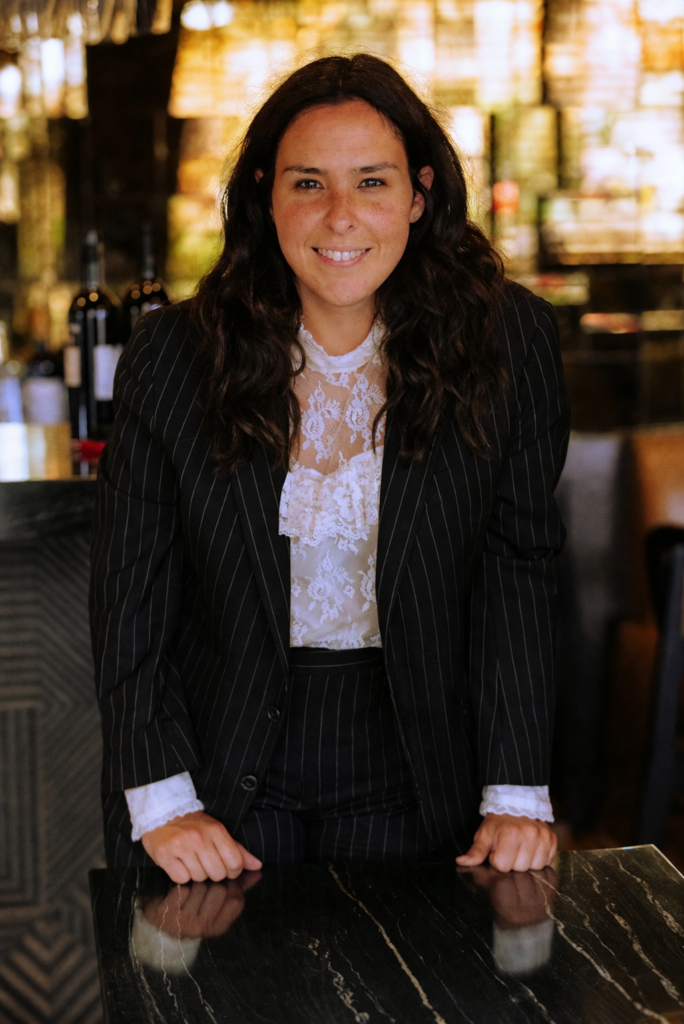
Claudia Rosselini, who came into the profession slightly later, experienced this shift from a different angle. Her early training was rooted in classical wine lists that dominated North America in the 2000s and early 2010s. These lists were structured, hierarchical, and brand driven. Natural wine, when it appeared, was initially peripheral.
“My initial experience was more the traditional classical lists, the natural wine movement didn’t really happen until later on,” she explains.
But as the movement gained traction, its influence became harder to ignore. For a new generation of sommeliers, it offered a different way of thinking about wine. Wine was no longer simply a product defined by appellation and prestige, but as something more personal and more immediate.
“We’re focusing on producers that give a damn about the environment, that really want their wines to speak of their place,” Rosselini says.
That shift, from brand to producer, from uniformity to individuality, was one of the movement’s most significant contributions. It brought attention to smaller growers, many of whom would have struggled to find a market in the previous paradigm. It also resonated with younger consumers, who were increasingly interested in authenticity, sustainability, and story. However, success also came with complication. As natural wine moved from the margins towards the mainstream, its meaning began to shift. What had started as a philosophy rooted in farming and minimal intervention gradually became, in some contexts, an identifiable style. Call it the Instagram effect. Natural became associated for some with certain sensory markers including turbidity, volatility, and a melange of “funk” (mousiness, Brettanomyces). And unfortunately for many these became the calling cards of authenticity. Add in new emerging styles such as orange wines, and their own set of new senses and the narrative was becoming as cloudy as many of the wines.
Rosselini does not hesitate to acknowledge that, at a certain point, the movement veered into excess.
“I feel like we went a little bit too extreme as many wines that were either volatile or ‘bretty’ and often tasting like those flaws and nothing else,” Rosselini says.

DiGrigoli offers a similar assessment, suggesting that difference itself became the defining feature.
“The consumer base was hungry for something different, and people were maybe not as scrupulous provided that they had that difference,” he notes.
For sommeliers, this period raises uncomfortable questions. In the enthusiasm to champion a new way of thinking about wine, did the profession lose sight of its responsibility to the guest? Did the desire to be at the forefront of a movement lead to a willingness to excuse flaws that would previously have been rejected? Were we mesmerised by ‘natural’ wines with front labels boasting street art aesthetics, and forgot to being more critical of the liquid in the glass?
Lepeltier’s answer is measured but clear.
“There was an attraction to this movement, to the taste of the wine, and to the value behind it. So there was a success and that success did lead to some marketing abuse which made its way down to sommeliers,” she says.
This is perhaps the most critical point. The dilution of the movement was not the result of a single group, but of a chain of participants including producers, importers, distributors, journalists, and sommeliers. Each of whom responded to the demand in their own way.
In some cases, that demand was shaped by a desire for belonging. Lepeltier offers a particularly insightful observation on this dynamic.
“When you start to recognise something it makes you belong to a community,” she explains.
In this sense, the embrace of certain flavours, even those traditionally considered faults, was not purely about taste. It was about identity. Recognising and accepting those characteristics became a way of signalling participation in a particular cultural moment.
But that moment had limits.
As natural wine became more widely available, and as prices increased, expectations began to shift. Consumers who were willing to accept variability were less willing to accept inconsistency. Wines that failed to deliver pleasure, regardless of their philosophy, began to lose their appeal.
Lepeltier describes this turning point with characteristic clarity:
“Tastes are evolving. As a sommelier or a customer when you are paying a certain price for a wine from here or there and both taste the same because they are mousy, volatile, and ultimately undrinkable it’s like fool me once, but you won’t fool me twice” Lepeltier comments.
All three agree that the movement has entered a new phase, one defined less by rebellion and more by refinement. The core principles remain intact, but the tolerance for extremes has diminished.
DiGrigoli says, “What people are looking for is things that are not only farmed thoughtfully, but taste clean and vibrant, not jaggedy as was accepted 5 or 7 years ago.”
Rosselini sees it in her daily work with guests and producers:
“We’re just starting to move past the fact that natural wine means kombucha, people are asking more questions, wanting wines that actually taste good,” she says.
That nuance, according to DiGrigoli, is perhaps best expressed in the recognition that natural wine is not, and never was, a style: “
Using natural to discuss viticulture is a very useful term. But to try to say that it is a style is where we start to err,” DiGrigoli notes.
What is emerging is not a rejection of natural wine, but a more mature understanding of it. The binary thinking of natural versus conventional, zero-zero versus manipulated, is starting to give way to something more nuanced, more complete. A necessary way of thinking according to Lepeltier.
“This is why the question of sulfites is extremely frustrating because it’s such a minor question compared to the dramatic economic realities that we are seeing today for viticulture all over the world. Literally vineyards are pulled out, lot of wines are being distilled. There is real human crisis happening. To say I don’t drink this wine because there is a little bit of sulfur, or I drink this wine because there is no sulfur lacks a more holistic perspective that I don’t think we talk enough about today.”
This distinction is crucial. Many of the world’s most revered producers, past and present, would fall under the natural umbrella in terms of their practices, even if they have never used the term. Conversely, wines that are marketed as natural may not always reflect the principles that originally defined the movement.
For sommeliers, this presents both a challenge and an opportunity.
The challenge lies in navigating a category that resists easy definition, and in communicating that complexity to guests in a way that is both honest and accessible. The opportunity lies in applying the lessons of the past two decades to create a more thoughtful, more transparent approach to wine service.
That approach requires a willingness to hold multiple truths at once. To recognise the value of minimal intervention while also acknowledging the role of technique. To celebrate individuality without excusing mediocrity. To support small producers while understanding the broader economic realities of the wine industry.
Lepeltier, in particular, emphasises the importance of maintaining a holistic perspective.
“There is real human crisis, vineyards are pulled out, and then we are just talking about a little bit of sulfur,” she says.
This is a sobering reminder that the debates that dominate sommelier culture about sulfur levels, about definitions, about stylistic boundaries, exist within a much larger context. For producers, these are not abstract questions. They are decisions that affect livelihoods, communities, and landscapes.
It is here that the role of the sommelier must evolve. In the early days of the natural wine movement, sommeliers were pioneers, introducing new ideas and challenging established norms. In the years that followed, they became, at times, gatekeepers, defining what was acceptable, and occasionally reinforcing a narrow interpretation of what natural wine should be.
Today, the role is something different again. It is less about advocacy for a particular category, and more about clarity. About helping guests understand not just what is in the glass, but how it came to be there.
That means being honest about style. It means distinguishing between wines that are intentionally experimental and those that are simply flawed. It means recognising that minimal intervention does not guarantee quality, and that intervention, when used thoughtfully, is not inherently negative.
It also means acknowledging that the movement itself has had unintended consequences. The emphasis on aesthetic, on labels, on narrative, on identity, has, at times, overshadowed the substance of the wines themselves. For some consumers, this has been an entry point; for others, a barrier.
Rosselini touches on this tension when discussing the appeal of natural wine to younger audiences.
“It gave wine a kind of cache that it hadn’t had in a very long time,” DiGrigoli notes in a similar vein.
That cultural relevance is not insignificant. It has brought new energy into the wine world, and with it, new perspectives. But it also raises questions about longevity. Trends, by their nature, are transient. Movements that endure do so because they evolve.
In this sense, the current movement feels like a turning point. The excesses of the past decade have been acknowledged. The language is becoming more precise. The wines themselves, in many cases, are improving.
Lepeltier sees this as part of a broader cycle: “The pendulum is shifting back today,” she says.
The question is not whether natural wine will remain relevant as it already is. The question is how it will be understood moving forward. If the early years were defined by disruption, and the middle period by expansion and, at times, confusion, the next phase may be defined by integration. Natural wine is no longer an outsider. It is part of the fabric of contemporary wine culture.
For sommeliers, this requires a recalibration of perspective. The goal is no longer to champion natural wine as an alternative, but to incorporate its principles into a broader understanding of quality.
To recognise that the most compelling wines are those that balance intention, integrity, and pleasure. In the end, the evolution of natural wine is not a linear story. It is a conversation that continues to unfold, shaped by producers, sommeliers, and consumers alike.
What remains constant is the underlying question that first gave
rise to the movement: not what wine should be, but what it could be, if we allowed it to speak more honestly of where it comes from. And perhaps sommeliers must now return not to a position of advocacy or opposition, but to interpretation.